top of page

Team Oakland 2026: Highlights and Reflections

1 day ago
2 min read

Updated: 16 hours ago

This year marked our 11th year hosting Team Oakland crews, a summer program run in collaboration with Youth Employment Partnership (YEP) that connects Oakland youth with paid work experience supporting their community and environment.


35 students spent six weeks working across the Sausal Creek watershed. They propagated plants and built structures at our native plant nursery, learned habitat restoration techniques in an array of ecosystems—from the Fern Ravine redwood forest downstream to the Jingletown Native Plant Garden. They tested water quality, identified benthic macroinvertebrates, and kayaked the estuary to survey marine debris.  


Here are a few snapshots from their summer, along with reflections from the students themselves!
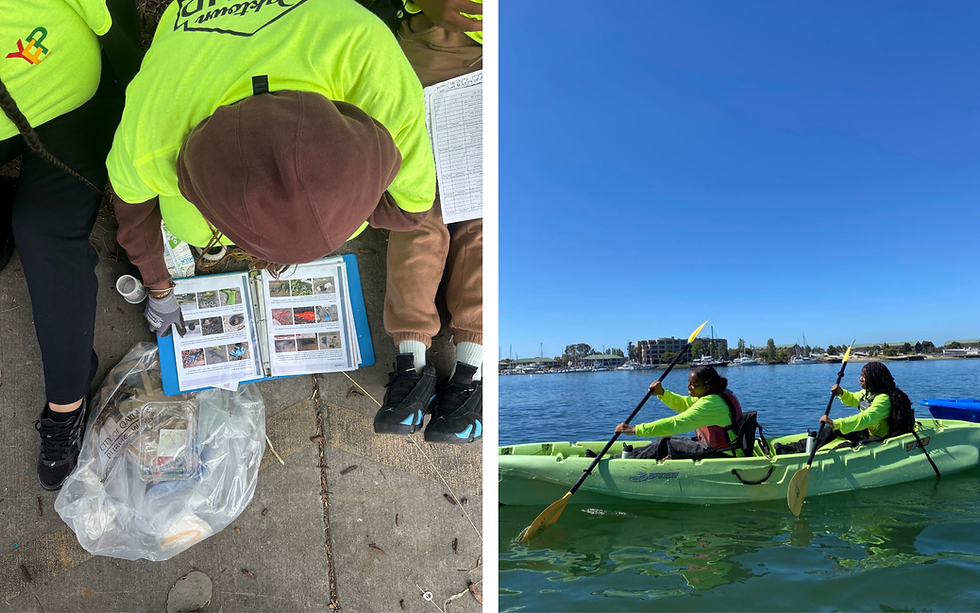

The crews got out on the water for a kayak outing and marine debris assessment at the Oakland-Alameda Estuary with I Heart Oakland Alameda Estuary (IHOAE). They explored the shoreline, documented the types of trash they observed and collected, learned how debris moves through our waterways, and what we can do to help prevent it.

“I learned that native species are important to the overall environment. I’ve experienced a lot of things, like how trash breaks down in the water and about different plants. An example is that plastic takes longer to break down than fabric, but they have similar effects on the environment. We’ve seen the effects of littering and many other things.”

–Charleze Augustine, Oakland Tech sophomore


Crews completed restoration and stewardship projects at multiple sites across the Sausal Creek watershed. At our native plant nursery in Joaquin Miller Park, they built a retaining wall to stabilize the ground beneath native plant benches, at the Jingletown Native Plant Garden, they removed invasive plants and helped maintain native plantings.

“During my time with Friends of Sausal Creek I’ve learned about the watershed and native species. I learned that whatever storm drains collect goes into the waterway without filtration, and how common it is that we see invasive plants/species and don’t tend to notice. I also learned why invasive species are so harmful, and how they impact native species. I’ve enjoyed my time working with FOSC, and my concern for the environment has grown.”

–Lela, Oakland Technical High School sophomore


Students tested water quality and collected and identified benthic macroinvertebrates to learn what aquatic organisms can tell us about conditions in the watershed.


bottom of page