Native Plants for Your Garden: Monkeyflowers (Erythranthe and Diplacus spp.)
With more than 80 species and subspecies across California coming in a wide variety of colors and shapes, monkeyflowers are easy to love. In our watershed, we have three species you’re likely to see: seep monkeyflower, scarlet monkeyflower, and sticky monkeyflower (aka bush monkeyflower).
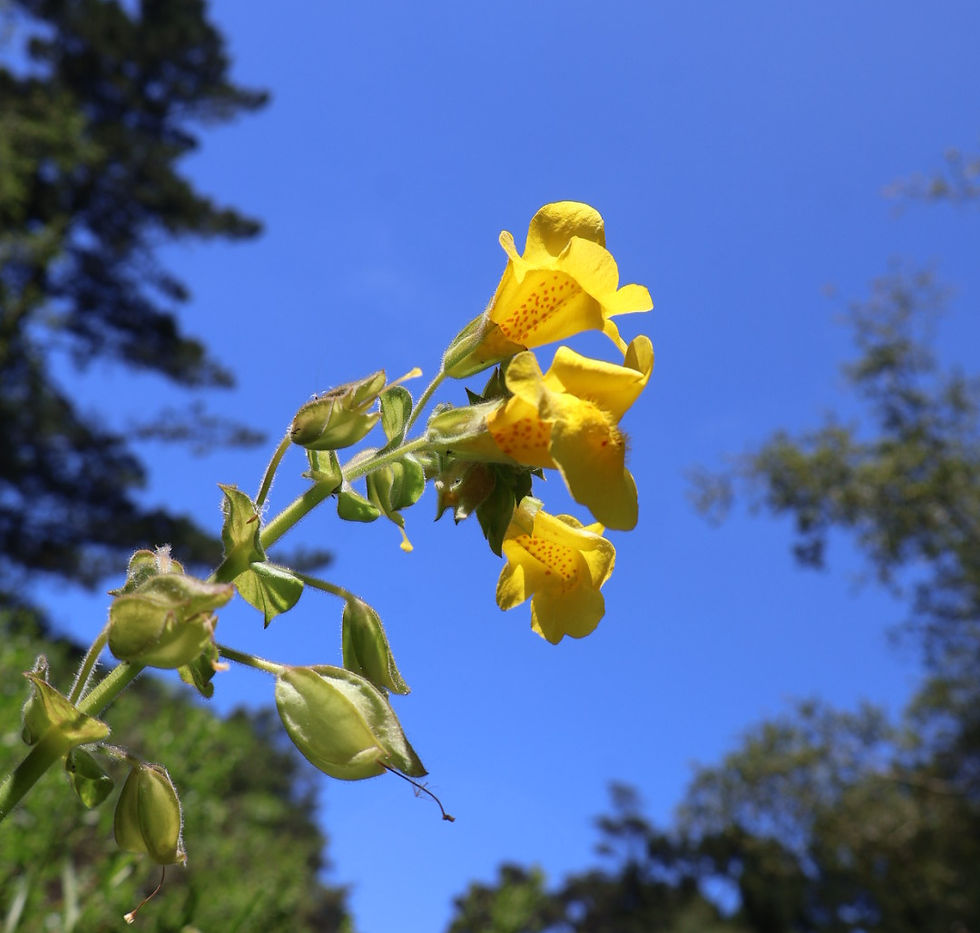
Seep monkeyflower (Erythranthe guttata), as its name suggests, grows in seeps and along streambanks. So long as it can keep its feet wet, this cheerful, yellow-flowered perennial will keep blooming and attracting bees, butterflies, and moths.

Scarlet monkeyflower (Erythranthe cardinalis) also loves streambanks and seeps and can be found growing right alongside seep monkeyflower in Dimond Canyon. Its bright red flowers are easy to recognize and irresistible to hummingbirds. Both seep and scarlet monkeyflower spread by rhizomes and readily reseed, making them perfect for creek-side restoration.

Sticky monkeyflower (Diplacus aurantiacus) grows best in dryer conditions, preferring sunny coastal scrub and chaparral where its delightful, orange flowers attract hummingbirds and bees. It’s a woody shrub, compared to the herbaceous seep and scarlet monkeyflowers, very drought tolerant once established, and an excellent plant for slope stabilization.
In the right conditions, monkeyflowers have a long blooming season, making them a great addition to pollinator gardens. They also do well in containers, so if you’re space-limited but looking for a colorful display to brighten your area, consider a charming monkeyflower.
We will have all three species at our plant sale this fall!
– Kristy Brady, FOSC Board Vice President